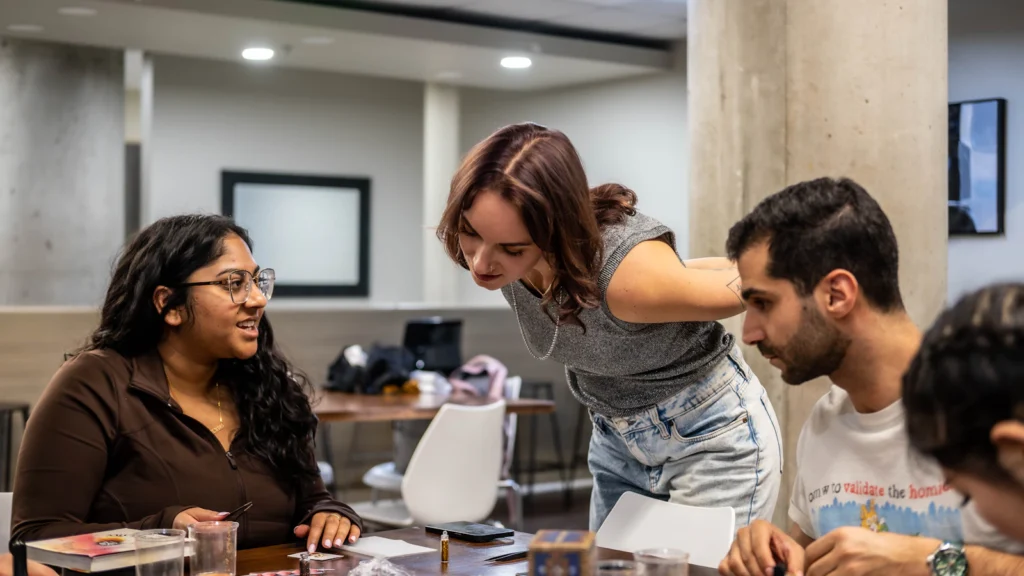
A church Thanksgiving event often includes several generations, late arrivals, limited volunteers, and a room that must be cleaned quickly. The games below are designed for that reality. They need no printable packets, avoid long elimination rounds, and can be explained in less than two minutes.
Use them for a youth night, small group, women’s or men’s ministry, family fellowship meal, Sunday school celebration, or intergenerational gathering. Every activity has a secular-friendly variation as well, which helps guests feel welcome without weakening the event’s gratitude theme.
Quick game chooser
- Five-minute opener: Gratitude A-to-Z, Harvest This or That, or Thankful Echo
- Large fellowship hall: Four-Corner Blessings, Human Harvest Timeline, or Gather the Flock
- Seated tables: One-Minute Testimony, Thanksgiving Categories, or Mystery Blessing
- Youth group: Turkey Translator, Gratitude Relay, or The Missing Basket
- Mixed ages: Pass the Pumpkin, Community Connections, or Build the Table
17 no-printable Thanksgiving church games
1. Gratitude A-to-Z
Time: 7 minutes | Group: teams of 4–6
Teams list something people can be thankful for under as many letters as possible. They may use a phone note, scrap paper, or simply report answers aloud. Give one point per valid answer and a bonus for an answer no other team shares. Allow teams to skip difficult letters such as X.
2. Four-Corner Blessings
Time: 10 minutes | Group: 12–60
Name four corners: people, places, opportunities, and everyday comforts. Read a prompt such as “something that helped you this year,” and players move to the category that best fits their answer. Give groups one minute to discuss, then invite one volunteer from each corner to share. Nobody must disclose anything personal.
3. Pass the Pumpkin
Time: 6 minutes | Group: circles of 6–15
Pass a small pumpkin, soft orange ball, or rolled pair of socks while a leader claps. When the sound stops, the holder names one helpful action a church or neighborhood can take this season. Keep answers short and allow a pass. There is no elimination.
4. Thanksgiving Categories
Time: 8 minutes | Group: tables or teams
Call a category: autumn foods, people who serve a community, Bible characters who showed gratitude, ways to welcome a guest, or things found outdoors in fall. Teams alternate answers and have three seconds per turn. A repeated answer ends only that round, not the team’s participation.
5. Turkey Translator
Time: 10 minutes | Group: two teams
A clue-giver describes a seasonal or faith-related word without saying it. Try gratitude, fellowship, harvest, generosity, service, neighbor, or provision. Teammates have 30 seconds to guess. For younger players, display or whisper two possible answers.
6. One-Minute Testimony
Time: 10–15 minutes | Group: tables
Give each table a neutral prompt: a person who encouraged you, a small win, a lesson learned, or a moment of unexpected kindness. Anyone who wants to share gets up to one minute. Appoint a gentle timekeeper and make passing normal so the activity never feels forced.
7. Thankful Echo
Time: 5 minutes | Group: whole room
The leader says, “I am thankful for…” and adds one word. The next person repeats it and adds another. Continue around a small circle, or run several circles at once for a large group. Restart cheerfully when the chain breaks.
8. Community Connections
Time: 8 minutes | Group: mingling
Players find someone who shares one harmless connection: favorite autumn weather, a food they both enjoy, a way they like to help, or a hobby they learned from someone else. After two minutes, call a new prompt. This works as an icebreaker without requiring a printed bingo sheet.
9. Human Harvest Timeline
Time: 10 minutes | Group: teams
Give each player an event verbally: planting, watering, growing, harvesting, preparing, sharing, cleaning, and composting. Without talking, teams arrange themselves in a sensible order. Older groups can discuss where gratitude, work, stewardship, and community support appear in the process.
10. Build the Table
Time: 12 minutes | Group: teams of 4–6
Teams use eight sheets of scrap paper and two cups to build a structure that can hold a hymnal or book for five seconds. Before placing each sheet, a player names something that makes a community table welcoming. Award applause for stability, creativity, and inclusion.
11. The Missing Basket
Time: 12 minutes | Group: family teams
Hide an empty basket somewhere inside the permitted room. Give three spoken clues based on visible features: “near something blue,” “below eye level,” and “not beside a door.” Teams solve the clues together. Never hide items in offices, kitchens, or other restricted spaces.
12. Gather the Flock
Time: 7 minutes | Group: 10–40
Call a number and players form groups of that size before a slow five-count ends. Once grouped, give a ten-second prompt such as “name one way to help a new guest.” Nobody is removed if a group is short; simply combine groups for the next round.
13. Gratitude Relay
Time: 10 minutes | Group: teams
Place a marker a short distance away. One player from each team walks to it, gives a gratitude word beginning with the next letter in the team’s sequence, and walks back. Walking keeps the game suitable for a fellowship hall. Skip difficult letters and keep aisles clear.
14. Mystery Blessing
Time: 8 minutes | Group: seated tables
Someone secretly chooses an everyday blessing such as clean water, music, friendship, books, or transportation. The table asks up to 15 yes-or-no questions to identify it. Afterward, discuss why ordinary things can be easy to overlook.
15. Harvest This or That
Time: 6 minutes | Group: any size
Players vote with left or right hands: sunrise or sunset, pie or crisp, cook or clean, parade or football, quiet dinner or lively gathering, serve locally or donate globally. Invite one brief reason after each choice. Avoid questions that divide people politically or financially.
16. Scripture or Saying?
Time: 10 minutes | Group: teams
Read a mix of short Bible verses about gratitude and familiar sayings. Teams decide whether each is Scripture or a common phrase. Use well-known verses, identify the reference after every answer, and avoid deliberately misleading paraphrases. A secular version can compare proverbs with modern expressions.
17. Service Plan Sprint
Time: 15 minutes | Group: teams of 4–6
Give teams a realistic scenario: welcome five new families, thank local volunteers, support homebound members, or reduce waste after a meal. They have five minutes to propose three actions using no more than $25. Each team delivers a 45-second plan. Celebrate practical ideas rather than choosing only one winner.
A ready-to-use 60-minute schedule
- 0–10 minutes: Community Connections as guests arrive.
- 10–20 minutes: Four-Corner Blessings.
- 20–35 minutes: Build the Table in mixed-age teams.
- 35–48 minutes: Turkey Translator.
- 48–58 minutes: Service Plan Sprint.
- 58–60 minutes: A voluntary one-word gratitude closing.
How to keep every generation involved
Use teams that mix ages rather than separating children, teens, and adults. Give every game a seated role—timekeeper, clue reader, scorekeeper, or reporter—for anyone who prefers not to move. Avoid food-dependent challenges because of allergies, dietary restrictions, and unequal access. Keep sharing optional and never ask guests to reveal hardship, finances, or private family details.
For a broader autumn event, use these fall harvest games for church family night. Youth leaders can also try our church youth-group Halloween games, while home hosts may prefer these Thanksgiving family gathering games.
Frequently asked questions
Which game works best for more than 50 people?
Four-Corner Blessings, Harvest This or That, and several simultaneous circles of Pass the Pumpkin scale easily. Use one microphone only for instructions and keep sharing within small groups.
Can these games work during a church meal?
Yes. Choose seated activities such as Mystery Blessing, Thanksgiving Categories, Turkey Translator, and One-Minute Testimony. Run one short game between meal stages instead of interrupting conversation repeatedly.
Do we need prizes?
No. Team applause, choosing the next prompt, or recognition for creativity works well. If prizes are used, keep them small and identical so the event stays cooperative.
Leave a Reply