18 Fun Party Games for Adults Without Drinking
Updated By Easy Group Games Editorial Team
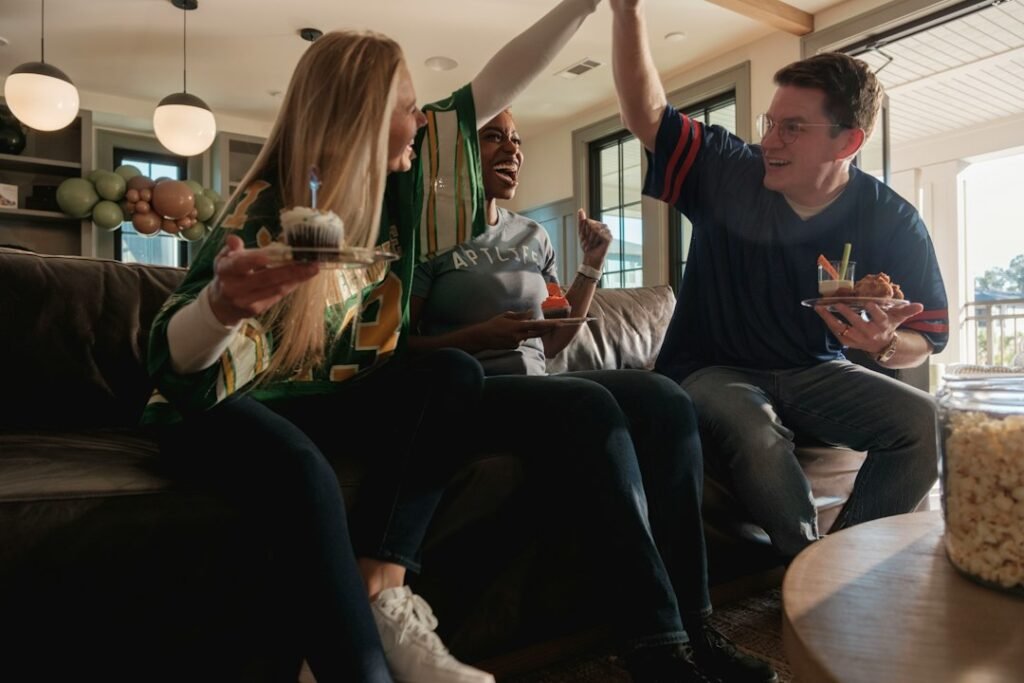
A great adult party does not need alcohol to avoid awkward silence. The right game gives people something easy to react to, laugh about and remember—without forcing anyone to perform or share more than they want.
This collection includes quiet table games, energetic team challenges and several options that require no supplies. Choose two or three that fit your space instead of trying to play everything in one night.
Quick chooser
| Situation | Best games | Preparation |
|---|---|---|
| Guests do not know each other | Common Ground Race, Name Three, Human Bingo | None to 10 minutes |
| Dinner table or small room | One-Word Story, Alphabet Answers, Forbidden Word | None |
| Large, energetic group | Reverse Charades, This-or-That Corners, Movie in a Minute | None to 5 minutes |
| Mixed personalities | Telephone Pictionary, Secret Mission, Celebrity | Paper and pens |
| Completely no-prop | Categories Countdown, Sound-Effects Story, Who Is Most Likely? | None |
No-prop party games
1. One-Word Story
Players: 4–12
Time: 10 minutes
You need: Nothing
Sit in a circle. The first player begins a story with one word, and each person adds exactly one word on their turn. Keep the sentence moving quickly; long pauses make the game less funny. End the round when the story reaches a natural conclusion or becomes impossible to rescue.
Make it better: Give the story a setting before beginning, such as “a disastrous wedding,” “an airport at midnight” or “the world’s worst job interview.”
2. Name Three
Players: 4 or more
Time: 10–20 minutes
You need: Nothing
One player gives the next person a category and counts down five seconds. The challenged player must name three valid things before time runs out—for example, “three foods you would not eat on a first date.” A successful answer earns a point; an unsuccessful player creates the next category.
Use specific, playful categories rather than trivia. “Three excuses for being late” produces better conversation than “three European capitals.”
3. Categories Countdown
Players: 5–15
Time: 10 minutes
You need: Nothing
Choose a category such as movies, breakfast foods or things found at a beach. Go around the circle with each person naming a unique answer. Players have three seconds to respond and cannot repeat anything already said. A player who hesitates or repeats an answer sits out until the next category.
4. Who Is Most Likely?
Players: 5–20
Time: 15 minutes
You need: Nothing
One person reads a lighthearted prompt: “Who is most likely to survive a zombie movie?” On the count of three, everyone points to one person. Let the group explain the funniest choices, then move to the next prompt.
Keep prompts positive or ridiculous. Avoid questions about money, relationships, appearance, health or private history unless the whole group is genuinely comfortable with them.
5. Alphabet Answers
Players: 4–10
Time: 10 minutes
You need: Nothing
Ask an open question such as “What should we bring on a road trip?” The first answer must begin with A, the second with B and so on. Players can challenge an answer that makes no sense, but creative explanations are encouraged.
6. Sound-Effects Story
Players: 6–16
Time: 10–15 minutes
You need: Nothing
Choose one storyteller and divide everyone else into small sound-effect teams. Assign each team a sound: weather, animals, vehicles, crowds or household noises. The storyteller improvises a short adventure and points to teams whenever their sound should appear. Switch storytellers after two or three minutes.
Low-prep games using paper
7. Telephone Pictionary
Players: 6–12
Time: 20–30 minutes
You need: Paper and pens
Give every player a small stack of paper. Each person writes a strange sentence, passes the stack left and receives another. The next player draws the sentence, covers the original text and passes it on. The following player writes what they think the drawing shows. Continue alternating words and pictures until each stack returns to its owner, then reveal the transformations.
8. Celebrity
Players: 6–20
Time: 30 minutes
You need: Paper slips, pens and a bowl
Each player writes three widely recognizable names on separate slips. Divide into two teams. Play three rounds using the same names: describe without saying the name, give only one word, and finally use silent gestures. A team earns one point for every correctly guessed slip before time expires.
Agree beforehand whether fictional characters and people known personally to the group are allowed.
9. Secret Mission
Players: 6–20
Time: Throughout the party
You need: Prepared mission slips
Give each guest a harmless mission when they arrive, such as “get someone to say pineapple,” “make two people switch seats” or “convince someone there is a new holiday.” Guests try to complete missions naturally without revealing them. At an agreed time, everyone guesses who was behaving suspiciously.
10. Human Bingo
Players: 8 or more
Time: 15–25 minutes
You need: Bingo sheets and pens
Create a grid of statements such as “has visited three continents,” “can play an instrument” or “owns a plant they have named.” Guests mingle to find a different person who matches each square. The first player to complete a row wins.
Use statements that invite conversation without requesting sensitive personal details.
11. Prediction Bowl
Players: 5–15
Time: 15 minutes
You need: Paper slips, pens and a bowl
Ask everyone to write a funny prediction about something that could happen before the party ends. Mix the predictions and read them aloud. The group guesses who wrote each one. Revisit the slips later to see whether any prediction came true.
12. Caption This
Players: 4–12
Time: 15–25 minutes
You need: Paper, pens and several unusual pictures
Show one picture at a time and ask everyone to write a caption anonymously. Read the captions aloud and let players vote for their favorite. The writer with the most votes wins the round. Use copyright-safe photos, your own images or pictures from old magazines you own.
Active games for bigger groups
13. Reverse Charades
Players: 8–24
Time: 20–30 minutes
You need: Prompt slips and a timer
In ordinary charades, one person acts while a team guesses. Here the entire team acts together while one teammate guesses. Give each team sixty seconds to complete as many prompts as possible. Choose actions and situations rather than single objects to make the group performance funnier.
14. This-or-That Corners
Players: 8 or more
Time: 10–20 minutes
You need: Enough room to move safely
Designate opposite sides of the room as two answers. Call a choice such as “sweet or salty,” “plan everything or improvise,” or “mountains or beach.” Everyone moves to the side matching their preference. Invite one or two people to explain, then ask the next question.
Keep walkways clear and provide a seated version in which players point left or right.
15. Common Ground Race
Players: 8–30
Time: 10 minutes
You need: Nothing
Divide guests into teams of four to six. Each team has three minutes to discover as many specific things as possible that every member shares. “We all like music” is too broad; “we have all watched the same series twice” counts. The team with the longest valid list wins.
16. Movie in a Minute
Players: 8–20
Time: 25–35 minutes
You need: Movie titles and a timer
Give each team a familiar movie and five minutes to create a sixty-second version containing the beginning, major conflict and ending. Teams may use people as scenery and household objects as props. Perform the mini-movies and award playful titles such as “best special effects” or “most confusing plot.”
17. Silent Line-Up
Players: 8–30
Time: 10 minutes
You need: Open space
Challenge the group to arrange themselves in order without speaking. Start with birthday month, then try distance traveled to the party, number of letters in a first name or wake-up time. Players may gesture but cannot write or use phones.
18. Group Freeze
Players: 8–24
Time: 15 minutes
You need: A list of scenes
Divide into teams. Call a scene—“a delayed flight,” “the final second of a championship” or “a family trying to assemble furniture.” Teams have ten seconds to create a frozen group picture. A judge awards a point for clarity, creativity or commitment.
How to choose games your guests will actually enjoy
- Start easy. Use a game with simple rules and low personal pressure before introducing acting or competition.
- Match the energy. A seated game works better during dinner; an active game can reset the room later.
- Explain the ending. Tell players how a round finishes and how points work before beginning.
- Make participation optional. Guests should be able to watch a round without being embarrassed or questioned.
- Stop while it is still fun. End a successful game before it becomes repetitive.
Frequently asked questions
What are the easiest adult party games with no supplies?
Name Three, Categories Countdown, One-Word Story, Alphabet Answers and Who Is Most Likely? can all begin immediately and work in an ordinary living room.
Which games work when guests do not know one another?
Common Ground Race and Human Bingo encourage short conversations without putting one person in the spotlight. This-or-That Corners also helps people notice shared preferences quickly.
How many games should I plan for a two-hour party?
Prepare three options but expect to play one or two. A flexible plan is better than interrupting good conversation to follow a strict schedule.
How can I make party games less awkward?
Explain the rules briefly, demonstrate one example and begin with volunteers. Avoid prompts about private relationships, appearance, money, politics or health. Choose activities where the group shares attention rather than examining one guest.
[…] an adults-only gathering, pair these ideas with our alcohol-free adult party games. For more structured cooperation, see our team-building games without […]
[…] your guests prefer alcohol-free activities, our adult party games without drinking offers more options. For a much larger crowd, use these no-prep large-group […]
[…] an entirely alcohol-free plan, see our adult party games without drinking. If your home is tight on space, these small-room indoor games are designed for […]