21 No-Prep Games for Large Groups That Actually Work
Updated By Easy Group Games Editorial Team
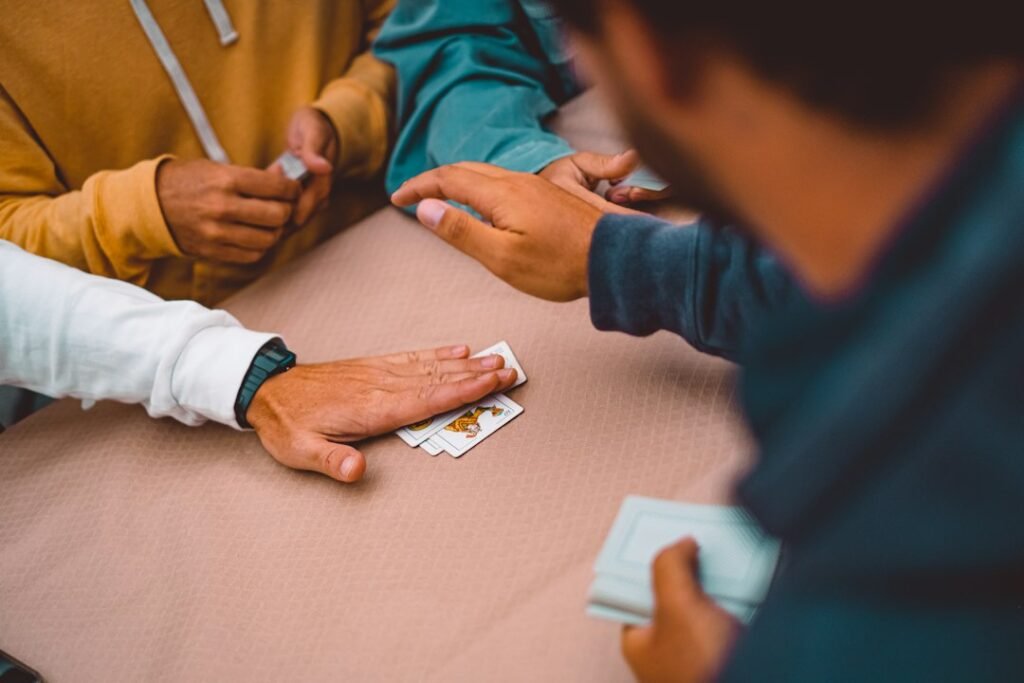
When a large group is waiting, the best game is usually the one you can explain in under a minute. These no-prep group games need no special equipment, printables or complicated scoring. Most work for adults, teens and mixed-age gatherings, and every game includes a simple way to adjust the energy level.
Pick two quiet options and two active options before guests arrive. That small backup plan makes it easy to change direction if the room feels crowded, shy or more competitive than expected.
Quick chooser
| Group situation | Best choices | Space |
|---|---|---|
| Guests are meeting for the first time | Common Ground, Group Count, Line Up | Small or large |
| Everyone needs to stay seated | Fortunately Unfortunately, Categories, Two Truths and a Tale | Small |
| The room needs more energy | Four Corners, Human Knot, Giants Wizards Elves | Open area |
| You have 20 or more people | Team Charades, Silent Scenes, Rock Paper Scissors Tournament | Medium or large |
Quiet no-prep games for large groups
1. Group Count
Players: 8–40 | Time: 5–10 minutes
The group tries to count from one to twenty, but nobody may decide an order. Any person can say the next number. If two people speak at once, return to one. Players may not point, signal or establish a pattern. The challenge becomes surprisingly absorbing as everyone learns to listen.
2. Fortunately, Unfortunately
Players: 6–30 | Time: 10 minutes
Begin a story with one sentence. The next player adds a sentence beginning “Fortunately,” and the following player continues with “Unfortunately.” Keep alternating around the circle. End after every person has contributed or when the story reaches a suitably ridiculous conclusion.
3. Categories
Players: 8–50 | Time: 10–15 minutes
Name a broad category such as breakfast foods, movie titles or things found at a beach. Move around the group as each person gives a unique answer within three seconds. A hesitation or repeated answer removes that player until the next round. Use familiar categories so speed—not specialist knowledge—creates the challenge.
4. Two Truths and a Tale
Players: 8–25 | Time: 15–25 minutes
Each person shares two true statements and one obviously playful invented statement. Everyone votes for the invention. For a safer version with new groups, restrict statements to harmless themes such as food, travel, hobbies and childhood favorites.
5. One-Word Story
Players: 6–20 | Time: 10 minutes
Players build a story one word at a time. Set a location—perhaps a haunted hotel or disastrous family picnic—then keep the pace fast. If the sentence gets stuck, allow the group to insert punctuation and begin a new sentence.
6. Memory Name Chain
Players: 8–25 | Time: 10 minutes
The first person says a name and a favorite thing beginning with the same letter: “Maya likes mangoes.” The next player repeats that introduction and adds their own. Continue around the circle. In an established group, replace names with imaginary superhero identities.
7. Five-Second Expert
Players: 8–30 | Time: 10–15 minutes
Choose one player as the “expert” and give them a silly subject such as invisible pets or life on the moon. They must speak confidently for five seconds before another player asks a question. Change experts after three questions. The aim is creativity, not accuracy.
Active games with no equipment
8. Four Corners
Players: 12–50 | Time: 15 minutes
Assign each corner a choice: morning, afternoon, evening or night; or four vacation types. Players walk to their answer. Invite one person from each corner to explain, then announce a new set of choices. Keep a seated pointing version available for guests with limited mobility.
9. Silent Line Up
Players: 10–40 | Time: 10 minutes
Challenge everyone to form a line without speaking. Use birthday month, height, distance traveled or alphabetical first name. Gestures are allowed; phones and writing are not. Once the line is complete, check it aloud.
10. Human Knot
Players: 8–16 per circle | Time: 10–20 minutes
Stand shoulder to shoulder. Each player reaches across the circle and takes two different hands. Without releasing hands, work together to untangle into a circle or several linked loops. Skip this game if close contact is uncomfortable, and never force a joint or step over someone.
11. Giants, Wizards and Elves
Players: 12–60 | Time: 15–20 minutes
Divide into two teams. Giants beat elves, elves beat wizards and wizards beat giants. Teams secretly choose a character, face each other and reveal it with a pose and sound. The winning team earns a point. This is rock-paper-scissors with enough theatrical energy for a large room.
12. Rock-Paper-Scissors Tournament
Players: 10–100 | Time: 10 minutes
Everyone pairs up for one round. The loser becomes the winner’s cheering supporter. Winners find new opponents, bringing their growing cheering sections with them, until two finalists remain. The expanding teams keep eliminated players involved.
13. Group Freeze
Players: 10–50 | Time: 15 minutes
Call out a scene such as “airport delay,” “championship finish” or “family assembling furniture.” Teams have ten seconds to create a silent frozen picture. Award a point for the clearest or funniest scene, then change the judging criterion.
14. Switch If
Players: 10–40 | Time: 10 minutes
Stand in a circle with one person in the middle. That person says, “Switch places if…” followed by a harmless statement such as “you prefer sweet snacks.” Everyone who agrees must move to a different place while the middle player tries to claim a spot.
Team games for 20 or more
15. Team Charades
Players: 12–60 | Time: 20 minutes
One person guesses while the rest of their team acts the same prompt together. Give each team sixty seconds to solve as many familiar actions, movies or occupations as possible. Large-group acting is less intimidating because nobody performs alone.
16. Silent Scenes
Players: 12–50 | Time: 20 minutes
Teams receive a familiar situation and have three minutes to plan a silent thirty-second scene. The audience guesses the setting and problem. Good prompts include a restaurant with terrible service, a camping trip in heavy rain or a first day at a strange school.
17. Common Ground Race
Players: 12–60 | Time: 10 minutes
Teams of four to six have three minutes to discover specific facts every teammate shares. “We all like music” is too broad; “we have all attended an outdoor concert” works. The team with the longest valid list wins.
18. Leader Detective
Players: 10–35 | Time: 10–15 minutes
Send one detective outside. The remaining players choose a leader who begins a repeating motion that everyone copies. The leader changes the motion while trying not to be noticed. The detective returns and gets three guesses.
19. This or That Debate
Players: 12–50 | Time: 15 minutes
Split the room between two playful choices such as beach or mountains. Each side gets one minute to prepare its best argument, then selects a speaker. Allow players to switch sides if persuaded. Avoid politics and personal topics.
20. Pass the Clap
Players: 8–40 | Time: 5–10 minutes
Stand in a circle. Two neighboring players clap at the same moment to pass the signal around. A double clap reverses direction. Once the rhythm is steady, add a second signal traveling the opposite way.
21. Invisible Object
Players: 8–30 | Time: 10 minutes
The first player mimes holding an imaginary object, uses it and transforms it into something new before passing it on. Every player must preserve the object’s apparent size and weight until the moment of transformation.
How to lead a large-group game successfully
- Give the goal first. Tell people what they are trying to achieve before explaining rules.
- Demonstrate one turn. A ten-second example prevents several minutes of confusion.
- Use short rounds. Stop while people still want another round.
- Offer an observer role. Let guests judge, time or simply watch without being questioned.
- Protect the space. Clear walkways and choose seated alternatives when movement is difficult.
For an adults-only gathering, pair these ideas with our alcohol-free adult party games. For more structured cooperation, see our team-building games without equipment.
Frequently asked questions
What is the easiest no-prep game for 20 people?
Four Corners is the easiest to explain and scales well. Common Ground Race is a better choice when you want small conversations rather than movement.
How many games should I plan for a one-hour gathering?
Prepare four and expect to use two or three. Start with a ten-minute low-pressure game, then choose the next activity based on the group’s energy.
How do I include shy players?
Use team acting instead of solo performance, avoid personal prompts and make participation optional. Quiet roles such as scorekeeper or judge can help someone join without becoming the center of attention.
[…] instant backup activities, bookmark our no-prep games for large groups. Rain in the forecast? These small-space indoor games adapt easily to a hall or living […]
[…] useful than a long game with no connection to daily behavior. For larger informal groups, use our no-prep large-group games. For social gatherings, try these adult party games without […]