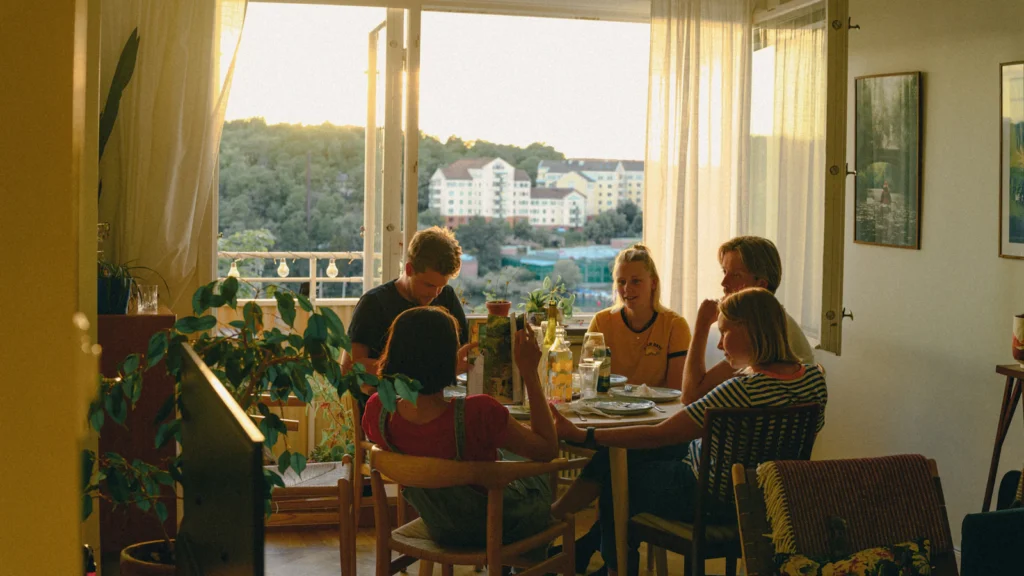
A small room can produce a better game night than a large one—provided nobody has to run, shout over dinner or move the furniture. These Thanksgiving games are designed for apartments, compact living rooms and crowded dining areas. Most are seated, low-mess and playable with ordinary household items or no supplies at all.
Quick answer: For zero setup, play One-Word Thanksgiving Story, Most Likely to Bring Dessert or Secret Rule Conversation. For the dinner table, use Menu Memory, Two Truths and a Side Dish or the Five-Second Gratitude Round. For mixed ages, choose Category Countdown, Pass the Expression or Family Sound Effects.
Choose a game for your space
| Situation | Best choices | Players |
|---|---|---|
| Everyone is seated | Menu Memory, One-Word Story, Category Countdown | 4–16 |
| Guests just arrived | Common Ground, Name the Connection | 6–20 |
| No supplies | Secret Rule, Pass the Expression, Five-Second Round | 4–20 |
| Mixed ages | Sound Effects, This or That Corners—Seated Edition | 5–18 |
19 low-mess Thanksgiving games for apartments
1. One-Word Thanksgiving Story
Time: 8 minutes. Sit in a circle or stay around the table. The first player says one word; each person adds exactly one word to build a Thanksgiving story. Set a friendly goal of completing three sentences rather than trying to catch mistakes.
2. Menu Memory
Time: 7 minutes. Player one says, “At our feast we served…” and names a dish. Each person repeats the list and adds one item. Accept real or ridiculous foods. For children or older relatives, let a partner prompt the first sound.
3. Two Truths and a Side Dish
Time: 10–15 minutes. Each player shares two true facts and one invented Thanksgiving food opinion or kitchen story. Everyone votes on the invention. Keep prompts light—favorite foods, cooking mishaps and holiday movies work better than personal family questions.
4. The Five-Second Gratitude Round
Time: 5 minutes. Name a category—something outdoors, a person who helped you, a small comfort—and give each person five seconds to answer. Passing is always allowed. Use new categories rather than demanding a serious speech from every guest.
5. Secret Rule Conversation
Time: 10 minutes. One player secretly chooses a harmless speaking rule: answers must start with the next alphabet letter, include a food, or end with a question. The group has a normal conversation while trying to identify the rule. Avoid accents or rules that imitate a person.
6. Most Likely to Bring Dessert
Time: 7 minutes. Read playful prompts: most likely to bring three pies, forget the serving spoon, organize leftovers or start a group photo. Everyone points on three. The chosen person may tell a quick story, but does not have to defend the vote.
7. Common Ground in Sixty Seconds
Time: 8 minutes. Divide into groups of three or four without moving chairs far. Each group finds five non-obvious things everyone shares. “We are all here” does not count; “we all prefer breakfast food” does. Groups report their most surprising match.
8. Name the Connection
Time: 8 minutes. A player names three things—such as blanket, cocoa and fireplace—and the group guesses the connection. Accept multiple sensible answers. Let younger players choose picture-like objects while adults can make their clues more abstract.
9. Category Countdown
Time: 6 minutes. Choose a category such as autumn foods, things that are orange or reasons to stay indoors. Go around naming one answer each. Count slowly from five when someone hesitates. Instead of elimination, simply start a new category.
10. Pass the Expression
Time: 5 minutes. Player one makes a facial expression—delighted by pie, surprised by a giant turkey or sleepy after dinner. The next person copies it, changes one feature and passes it along. Compare the first and final expressions.
11. Family Sound Effects
Time: 7 minutes. One person narrates a simple holiday scene while assigning sounds to the group: doorbell, oven timer, windy leaves, bubbling pot and happy chatter. The narrator pauses for each sound. Keep volume at conversation level for neighbors.
12. Would You Rather: Cozy Edition
Time: 8 minutes. Ask choices that do not expose private opinions: apple pie or pumpkin pie, board game or movie, early dinner or late dinner, sweater or blanket. Players show one or two fingers to vote, then invite two people to explain.
13. The Invisible Object
Time: 6 minutes. Mime passing an invisible object around the table. Each player changes its weight, temperature or shape before handing it on. At the end, everyone guesses what the object became. No standing is required.
14. Thanksgiving Alphabet Race
Time: 8 minutes. Work together from A to Z naming autumn, food or gathering words. Skip difficult letters and return to them. For a competitive version, two sides of the table alternate, but keep the whole group involved after a missed letter.
15. Who Said It?
Time: 10 minutes. Each person writes one harmless fact on a small scrap of paper—“I once burned toast” or “I can name five birds.” Mix and read them aloud while the group guesses. With no paper, one host can collect facts quietly by phone before guests arrive.
16. This or That—Seated Edition
Time: 5 minutes. Designate left hand for option A and right hand for option B. Call choices such as parade or football, mashed potatoes or stuffing, cook or clean. Players vote without leaving their chairs, making this easy beside a full table.
17. Seven-Word Toast
Time: 6 minutes. Everyone creates a toast of exactly seven words. It can be sincere or silly: “Good food, warm room, excellent stretchy trousers.” Pair children with adults to count words. Nobody must perform alone; pairs can read together.
18. Photo Detail Detective
Time: 8 minutes. Choose a non-private photo already on a phone—an outdoor scene, pet or meal. Show it for five seconds, hide it, then ask detail questions. Do not pass the phone around food; hold it where everyone can see.
19. The Quiet Ranking Game
Time: 8 minutes. Give five items to rank together, such as pie, nap, walk, movie and leftovers. The challenge is to reach one group order using indoor voices and one speaker at a time. The negotiation is the game; there is no correct answer.
A 40-minute apartment-friendly game plan
- Arrival—8 minutes: Common Ground in Sixty Seconds.
- At the table—8 minutes: Menu Memory.
- After dinner—10 minutes: Secret Rule Conversation.
- Mixed-age reset—7 minutes: Family Sound Effects.
- Calm finish—7 minutes: Seven-Word Toast.
Keep only one active game area. Store coats and bags away from the walkway, leave the kitchen path clear and avoid games that require guests to swap seats repeatedly.
How to make games work in a crowded room
- Use hand signals, pointing and short speaking turns instead of running.
- Choose cooperative goals so eliminated guests do not become extra clutter around the room.
- Keep game materials in one small tray or envelope.
- Set “conversation volume” before starting, especially in an apartment.
- Offer seated versions for every movement prompt.
- Do not place paper, phones or game pieces beside hot serving dishes.
For a broader gathering, see our Thanksgiving games for family gatherings. If everyone is already seated, try these Thanksgiving table games. Hosting friends rather than relatives? Use the separate Friendsgiving games guide.
Frequently asked questions
What is the best Thanksgiving game for a small apartment?
One-Word Thanksgiving Story is the easiest: it needs no supplies, everyone stays seated and the host can end naturally after a few sentences. Secret Rule Conversation is better for an adults-only group that wants a longer game.
How many people can play in a small living room?
Most of these games work for four to twenty people because they use turns rather than movement. For more than twelve, create two conversational groups for the first round and bring everyone together for a final game.
How do I keep Thanksgiving games from becoming too loud?
Choose seated word, memory and voting games; avoid timers that reward shouting. State that clues are given at conversation volume and use a raised hand—not a louder voice—to pause the room.
Can children and grandparents play together?
Yes. Use familiar categories, allow partners, read prompts aloud and avoid speed as the only way to win. Menu Memory, This or That and Seven-Word Toast adapt especially well across ages.
Hosting only one other person? Use these Thanksgiving games for two people.
Leave a Reply