17 Fall Games for Seniors in Nursing Homes and Assisted Living
Updated By Kate Anderson
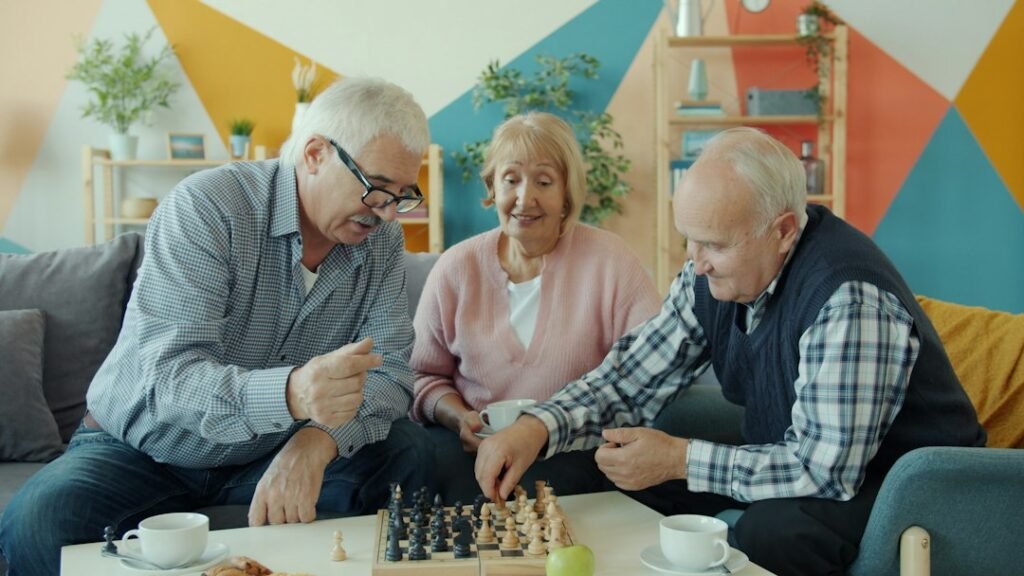
Autumn gives activity directors an easy theme—colorful leaves, familiar foods, harvest memories and cooler weather—but a good program still has to fit the people in the room. These fall games for seniors in nursing homes include seated, low-vision, memory-friendly and mixed-ability options for assisted living, memory care, senior centers and family visits.
None of the activities depends on speed or complicated rules. Most take 10–25 minutes and use large print, familiar objects and inexpensive supplies. Adapt the language to local traditions in the United States, Canada, the United Kingdom or Australia.
Quick choice guide
| Group need | Good choices | Helpful adaptation |
|---|---|---|
| Memory care | Autumn Senses, Finish the Fall Saying, Leaf Match | Use one instruction at a time |
| Wheelchair-friendly | Tabletop Pumpkin Roll, Harvest Toss, Scarf Leaves | Move targets closer |
| Low vision | Sound Guess, Large-Print Trivia, Mystery Bag | Use high contrast and read aloud |
| Family event | Then-and-Now, Harvest Price Guess, Team Story | Pair generations |
Set up a comfortable game session
- Use a semicircle so participants can see the leader and one another.
- Print prompts in at least 18-point type with dark text on a plain light background.
- Offer a practice round and repeat rules calmly rather than correcting in public.
- Keep games cooperative when competition creates anxiety.
- Check mobility, swallowing, allergy, infection-control and fall-risk guidance with staff before using props or food.
- Plan for 30–45 minutes, but end while energy is still good.
17 easy fall games for older adults
1. Autumn Mystery Bag
Place safe seasonal objects in a cloth bag: a pinecone, soft scarf, wooden spoon, artificial leaf or small smooth gourd. Without looking, each player touches one object and describes its shape or texture before guessing. For memory care, show two picture choices and let the player point.
2. Finish the Fall Saying
Read the first half of a familiar phrase: “An apple a day…,” “Make hay while…,” or “The apple doesn’t fall….” Participants finish it together. Invite anyone who remembers a related story to share it, but keep sharing optional and move on before one person takes over.
3. Tabletop Pumpkin Roll
Use a small lightweight ball or soft fabric pumpkin on a long table. Players roll it toward numbered zones made with painter’s tape. Wider nearby zones can score fewer points and narrow distant zones more. A pool noodle along the edge prevents repeated bending to retrieve the ball.
4. Harvest Basket Toss
Set baskets at two or three distances and toss beanbags or rolled socks. Every participant chooses their own distance. Give bonus points for calling out an autumn word before the toss, or remove scoring entirely and count how many “harvest items” the whole group gathers.
5. Leaf Color Match
Cut large leaf shapes from red, gold, orange and brown paper. Players match pairs by color or by a bold symbol drawn in the center. Turn it into a gentle memory game with only four to six pairs. For low vision, combine color with distinct black shapes.
6. Fall Sound Guess
Play or imitate short sounds: wind, rain, geese, crackling fire, footsteps on leaves or an apple being sliced. Offer three spoken choices for each. Ask what memory the sound brings back; the conversation is often more valuable than keeping score.
7. Harvest Price Guess
Display large photos or real packages of apples, oats, tea, canned pumpkin and soup. Ask participants to estimate today’s price, then discuss what each item cost years ago. Avoid framing older answers as wrong—the purpose is reminiscence and comparison, not a test.
8. Autumn Category Circle
Name a category such as fall foods, things worn in cool weather, crops or colors. Go around the circle with each player naming one item. Participants may say “pass,” repeat a previous answer, or ask a partner for help. A cooperative version challenges the group to reach 20 answers together.
9. Scarf Leaves
Give each participant a lightweight scarf or tissue square. Play gentle music and call movements: float, swirl, land, rise and drift. Participants can move one hand, both hands or simply follow with their eyes. Finish by letting all the “leaves” settle on laps.
10. Apple Basket Word Build
Write the phrase APPLE ORCHARD in large letters. Teams find as many shorter words as they can using those letters. Accept two-letter words for an easier round and allow spoken answers while a helper writes. Try AUTUMN HARVEST for a second round.
11. Then-and-Now Harvest
Show pairs of images—a hand rake and leaf blower, canning jar and freezer container, handwritten recipe card and phone recipe. Players identify the older item, the newer item and what stayed the same. Invite practical memories without suggesting that one era was better.
12. Pass the Pinecone
Pass a large clean pinecone or soft autumn prop while music plays. When the music pauses, the holder answers a low-pressure prompt: favorite pie, a pleasant weather memory, a color they like, or a place they once visited in fall. Allow passing without explanation.
13. Large-Print Autumn Trivia
Ask questions with two or three possible answers rather than relying on recall alone: “Which bird is known for migrating in a V formation—goose or robin?” Mix nature, music, foods and local traditions. Let tables discuss before answering, and explain the answer in one interesting sentence.
14. Acorn Cup Shuffle
Hide a large wooden bead or pom-pom under one of three opaque cups and slowly switch their positions. Players point to the cup they think holds the “acorn.” Keep movements easy to follow and invite a participant to become the shuffler. Never use small objects where swallowing risk is a concern.
15. Fall Photo Bingo
Create cards with large, high-contrast pictures rather than tiny words: leaf, apple, umbrella, mug, boots, squirrel, pie and scarf. Show or call one picture at a time. Use reusable counters large enough to grip, and play until several people win rather than stopping after the first.
16. Cooperative Autumn Story
Begin with, “On the first cool morning, we opened the door and found…” Each participant adds one sentence or chooses from two suggested continuations. A volunteer writes the story in large print and reads the finished version aloud. Keep the plot warm, funny and free from pressure to remember previous details.
17. Guess the Autumn Aroma
Place safe scent sources in sealed containers with small air holes: cinnamon stick, coffee, orange peel, tea bag or rosemary. Participants smell without touching and select from picture labels. Confirm allergies and sensitivities first; skip this game when respiratory or infection-control policies make scents unsuitable.
A 40-minute assisted-living program
- 5 minutes: welcome, orientation and a familiar autumn song.
- 10 minutes: Autumn Mystery Bag with four objects.
- 12 minutes: Harvest Basket Toss, seated or standing by choice.
- 8 minutes: Finish the Fall Saying and brief reminiscence.
- 5 minutes: Scarf Leaves cool-down and thank-you.
Adaptations for dementia and mixed abilities
Use short concrete phrases: “Choose red or yellow” works better than a multi-step instruction. Demonstrate before asking. Keep materials visible, reduce choices, and celebrate participation instead of correct answers. Pair a participant with a familiar staff member or family visitor, but allow the older adult time to respond before a helper steps in.
For hearing loss, face the group, reduce background music during instructions and provide written keywords. For limited reach, bring the target closer or place materials on a nonslip mat. Never assume a seated participant wants a childlike activity; familiar themes can still be presented with adult language and attractive materials.
More seasonal group-game ideas
If your program is planning later October activities, use these Halloween games for seniors in assisted living. Family visitors can also try these Thanksgiving family games. For simple everyday options, browse our indoor group games for adults in small spaces.
Frequently asked questions
What are the best fall games for seniors with limited mobility?
Tabletop Pumpkin Roll, Mystery Bag, Finish the Fall Saying, Photo Bingo and Sound Guess all work seated. Adjust distance, prop weight, print size and round length for the individual group.
How many games should an activity director plan for one session?
Prepare three activities for a 30–45 minute program plus one quiet backup. Switching between conversation, gentle movement and a thinking game usually works better than repeating the same type.
Are competitive games suitable for memory care?
They can be, but cooperative goals are often more comfortable. Count a group total, offer unlimited hints, and recognize effort, humor and helping—not only the highest score.
Planning November? Use these accessible Thanksgiving games for seniors in assisted living, including a complete 45-minute program.
Leave a Reply