17 Quiet Friendsgiving Games for Introverts and Low-Key Groups
Updated By Kate Anderson
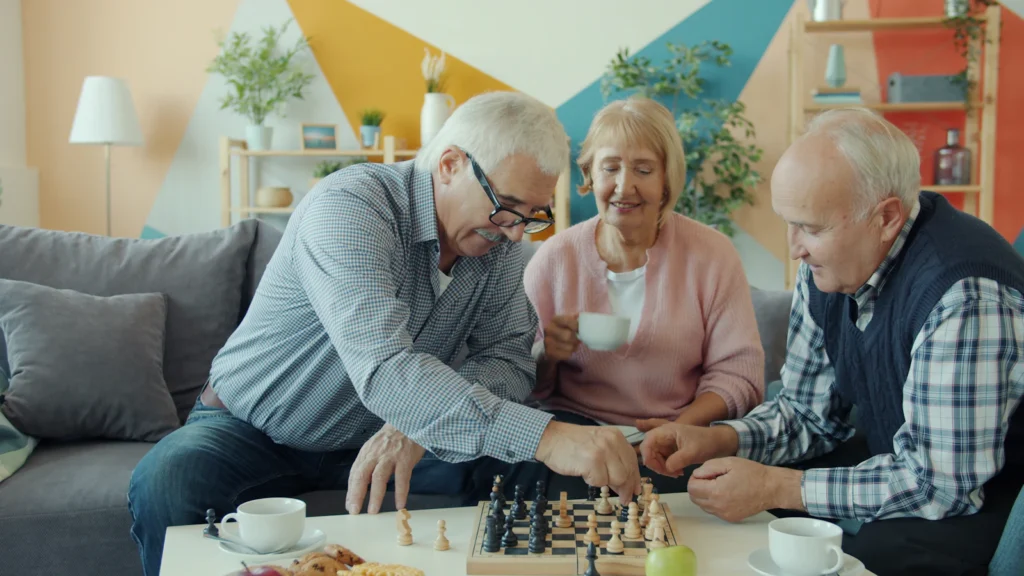
Not every Friendsgiving needs charades, shouting or a circle where everyone is suddenly expected to tell a personal story. Quiet games work when they let guests participate beside the conversation—not perform for the whole room. The activities below use writing, pairs, cooperative choices and optional sharing, so people can join without becoming the center of attention.
Quick answer: Start with Silent This or That, add a Partner Playlist and finish with Cooperative Ranking. For guests who prefer writing, choose Six-Word Captions, Anonymous Predictions or the Paper Conversation Chain.
Choose by energy level
| Need | Best games | Spotlight level |
|---|---|---|
| Very quiet arrival | Silent This or That, Tabletop I Spy | None |
| Pairs instead of a group | Partner Playlist, Two-Person Connections | Low |
| Mostly written | Six-Word Captions, Anonymous Predictions | None |
| Calm whole-group finish | Cooperative Ranking, Shared Story Cards | Low |
17 quiet Friendsgiving games without forced sharing
1. Silent This or That
Read a neutral choice—tea or coffee, sweet or savory, movie or book. Guests vote with one or two fingers. Nobody has to explain. After several rounds, invite optional pair conversations about one answer.
2. Six-Word Captions
Show a neutral food or autumn photo on one phone. Everyone writes a caption of exactly six words. Collect and read them without names, or let guests simply compare with a neighbor. Avoid using private photos of attendees.
3. Partner Playlist
Pairs select one song for cooking, one for a road trip and one for a quiet morning. They do not have to play the music. The goal is to agree on three titles, giving conversation a structure without a public performance.
4. Tabletop I Spy
One person silently chooses a visible object and gives written or spoken clues: color, shape, location. Guests point when they think they know it. Keep the objects away from anyone’s phone, bag or personal belongings.
5. Cooperative Ranking
Give the group five harmless items—pie, nap, walk, movie and leftovers—and ask for one shared ranking. Use a calm one-speaker-at-a-time rule. The discussion is the game; there is no correct order.
6. Anonymous Predictions
Guests write a light prediction for the evening: first dessert finished, most-requested leftover or time the kettle goes on. The host reads them without names and checks the results later. Do not predict people’s behavior or private choices.
7. Two-Person Connections
Pairs receive three words such as blanket, rain and library. They create one sentence connecting all three. After two minutes, they may share the sentence or place it on the table for others to read.
8. Quiet Category Grid
Draw a simple three-by-three grid on paper with categories such as warm foods, autumn colors and indoor activities. Pairs fill one answer per square. Repeated answers are fine; this is cooperative, not a speed race.
9. One-Line Recipe
Each guest invents a recipe instruction in one line: “Add cinnamon until the room smells finished.” Combine the lines into a strange imaginary recipe. No actual food is handled, and reading aloud can be done by the host.
10. The Paper Conversation Chain
Write one neutral prompt at the top of a page: “What makes a perfect rainy afternoon?” Each person adds one short answer, folds the page to hide it and passes it on. Reveal the chain only if everyone agrees.
11. Shared Story Cards
Write five ordinary words on separate scraps—train, pie, sweater, key and window. Pairs create a four-sentence story using three of them. They may exchange stories silently with another pair rather than presenting.
12. Photo Detail Memory
Display a non-private landscape, pet or food photo for ten seconds. Hide it and ask five detail questions. Guests write answers individually, then compare in pairs. Accuracy is less important than noticing.
13. The Gentle Draft
Create a pretend cozy-night draft: one snack, one movie genre, one drink and one activity. Pairs alternate selections from a shared list, then explain their final evening to each other. No group report is required.
14. Finish the Sentence—Optional Edition
Offer prompts that can stay impersonal: “A small thing that improves winter is…” or “The best leftover becomes…” Guests write an answer and choose whether the host may read it anonymously. Passing is always valid.
15. Silent Drawing Telephone
Each person draws a simple object, passes it, and the next person writes what they think it is. Pass again for a new drawing. Unfold at the end. Use concrete prompts and never ask people to draw one another.
16. The Three-Clue Object
Pairs describe a common object using exactly three written clues without naming it. Exchange clues with another pair and guess. Good topics include kitchen tools, stationery, weather items and travel objects.
17. Quiet Closing Note
Place one page where guests may write a brief thank-you, favorite dish or pleasant moment before leaving. It is not scored and signatures are optional. The host can keep it private rather than posting it online.
A low-energy 45-minute plan
- Arrival—5 minutes: Silent This or That.
- Pairs—10 minutes: Partner Playlist.
- At the table—10 minutes: Six-Word Captions.
- After dinner—12 minutes: Cooperative Ranking.
- Closing—8 minutes: Quiet Closing Note.
How to keep participation comfortable
- State “passing is fine” before the first prompt.
- Use pairs and writing before whole-group responses.
- Do not surprise guests with singing, acting, dares or personal confessions.
- Allow extra response time; quiet does not mean disengaged.
- Avoid scoring individuals and timed speaking.
- End the game when natural conversation begins.
For a broader menu, see our Friendsgiving games for adults. If different friend groups have not met, begin with these low-pressure Thanksgiving icebreakers. Hosts with limited room can also use our small-space Thanksgiving games.
Frequently asked questions
What is the best Friendsgiving game for introverts?
Silent This or That is the easiest starting point because guests can participate without speaking. Partner Playlist is better when people are comfortable with one-to-one conversation.
How do I avoid putting guests on the spot?
Explain that passing is allowed, use anonymous or paired answers and never select someone unexpectedly. Ask for volunteers only after everyone understands the activity.
Can a quiet game still work for a large group?
Yes. Split groups larger than twelve into pairs or tables and use the same prompt simultaneously. Bring the room together only for an optional final comparison.
Do these games require printables?
No. A few use ordinary paper, but the prompts can be spoken or typed into a phone note. No special downloads, cards or purchases are required.
Leave a Reply